HOW PLATFORMS AND AI SHAPE WHAT WE SEE, BELIEVE AND SHARE
I research it, teach it and help organizations respond to it.
Communication scholar (Dr. phil.) · 20+ years in journalism and media production · Focus: propaganda, memes, synthetic media and AI agents.


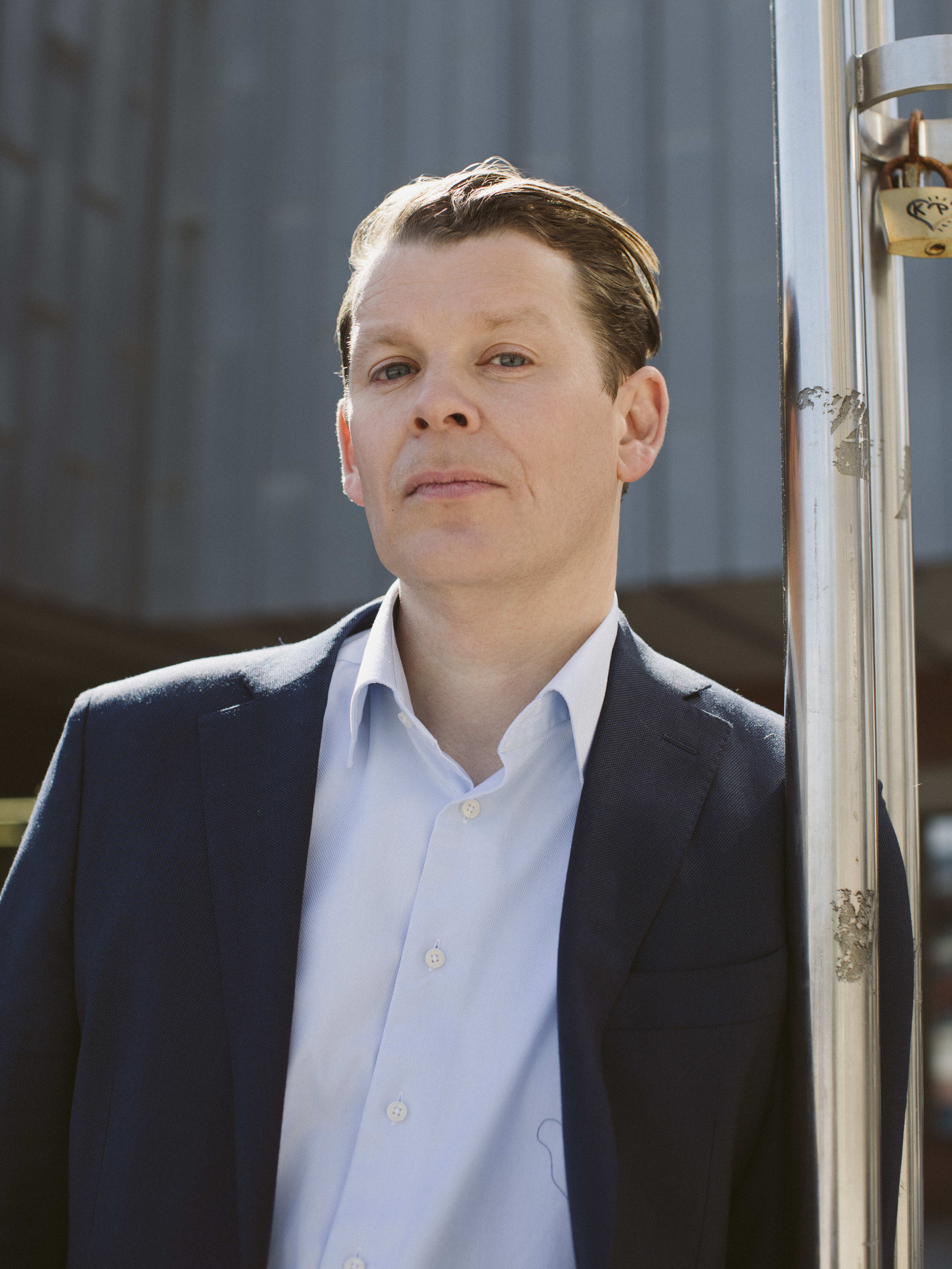
Photos Katharina Poblotzki
HELLO
Dr. Marcus Bösch researches propaganda in the platform era: synthetic media, platform dynamics, and the political uses of TikTok and memes. He publishes Understanding TikTok, a newsletter on platform politics read by more than 8,800 subscribers worldwide. According to DIE ZEIT (48/2026), his observations and essays have grown into a steadily expanding standard reference.
He earned his doctorate at the University of Münster in 2026 with a dissertation on postdigital propaganda. His research has appeared in peer-reviewed journals including New Media & Society, Platforms & Society, and Media and Communication, and in policy publications with the Mozilla Foundation and the Friedrich-Ebert-Stiftung. He teaches as a lecturer at TH Köln and Hochschule Hannover and has trained journalists in more than 15 countries for DW Akademie.
He advises media organisations, political institutions and security bodies, and gives talks and workshops. He studied political science, history and media informatics at the University of Cologne (M.A.) and trained as a journalist at Deutsche Welle. After more than a decade as an editor and author for public broadcasters and an M.A. in Game Development and Research, he co-founded two technology companies.
WORK WITH ME
I help newsrooms, institutions, foundations and schools understand how platforms and AI shape public communication – and how to respond.
Keynotes & lectures – propaganda, AI slop, synthetic media, memes, TikTok and political communication
Workshops – platform-native storytelling, verification on TikTok, synthetic media, digital journalism
Advisory – TikTok and social media strategy, platform evaluations, briefings on disinformation
Schools & parents – TikTok, AI-generated content, online hate and growing up on platforms
Available in English and German.
Für Schulen und Kommunen: Eine Förderung im Rahmen von „Demokratie leben!“ kann je nach Programm und Voraussetzungen möglich sein.
Get in touch: m@marcus-boesch.de
CLIENTS
ARD, Auswärtiges Amt, Axel Springer, Bertelsmann, Bundespresseamt, Bundeswehr, Bundeszentrale für politische Bildung, Bündnis 90/Die Grünen, Condé Nast, European Commission, Friedrich-Ebert-Stiftung, Goethe-Institut, Google, Greenpeace, Körber-Stiftung, Mozilla Foundation, NATO, Party of European Socialists, ProSiebenSat.1, SPD, U.S. Department of State, Vice, ZDF, ZKM, Zürcher Hochschule der Künste.
IN THE MEDIA
Vanity Fair (US), The New York Review of Books (US), LA Times (US), Teen Vogue (US), Wired (US), Vice (US), Insider (US), BBC (UK), BBC World Service (UK), Le Figaro (F), SRF, Arte, Spiegel, Stern, Frankfurter Allgemeine Zeitung, Süddeutsche Zeitung, Die Zeit, Tagesschau, ZDF Heute, DLF, DLF Kultur, Handelsblatt
GUTEN TAG
Dr. Marcus Bösch ist Kommunikationswissenschaftler und erforscht Propaganda im Plattformzeitalter: synthetische Medien, Plattformdynamiken und die politische Nutzung von TikTok und Memes. Seit 2020 gibt er den Newsletter Understanding TikTok heraus, der weltweit über 8.800 Abonnent:innen erreicht. Laut DIE ZEIT (48/2026) haben sich seine Beobachtungen und Essays „zu einem stetig wachsenden Standardwerk entwickelt“.
Er wurde 2026 an der Universität Münster mit einer Dissertation über postdigitale Propaganda promoviert. Seine Forschung ist in Fachzeitschriften wie New Media & Society, Platforms & Society und Media and Communication erschienen, außerdem in Publikationen der Friedrich-Ebert-Stiftung und der Mozilla Foundation. Er lehrt als Lehrbeauftragter an der TH Köln und der Hochschule Hannover und hat für die DW Akademie Journalistinnen und Journalisten in über 15 Ländern ausgebildet. Er berät Medienorganisationen, politische Institutionen und Sicherheitsbehörden, hält Vorträge und leitet Workshops.
Er studierte Politikwissenschaft, Geschichte und Medieninformatik an der Universität zu Köln (Magister Artium) mit einem Auslandssemester in Cambridge (UK) und volontierte anschließend bei der Deutschen Welle. Über zehn Jahre arbeitete er als Redakteur und Autor für öffentlich-rechtliche Sender und gründete nach einem M.A. in Game Development and Research zwei Technologieunternehmen mit: das Serious-Games-Studio The Good Evil GmbH und das AR/VR-Studio Vragments GmbH.
CONTACT
Newsletter · m@marcus-boesch.de · ORCID · Google Scholar · LinkedIn · Bluesky
AR / VR PROJECTS
Scrollmersive – WebXR tool for scrollable one-pagers with 3D objects; used by Deutsche Welle.2020 · Concept and development with Vragments
XR DOK – Open-source VR toolkit that lets journalists build VR stories without code. Funded by MIZ Babelsberg.2018/19 · Concept and development with Vragments
Explainar – AR prototype that recognises objects via machine learning and reads out context from Wikipedia in several languages.2017 · With Vragments
Stadtmitte VR – VR game in a digital replica of a Berlin underground station, with Technologiestiftung Berlin and BVG.2016 · Game design · Project
VRΩ – VR journey into a patient’s body to find and destroy lung cancer. Leap Motion 3D Jam.2015 · Game, story and sound design · Gallery
DIGITAL GAMES
Serena Supergreen – Three-year BMBF-funded research project with TU Dresden and Wissenschaftsladen Bonn. Comenius EduMedia Seal 2018, Pädagogischer Medienpreis 2017.2017 · Game design and project management with Linda Kruse · serenasupergreen.de
Basel 1610 – Museum game on the plague in the 17th century for the Historisches Museum Basel, with the University of Basel.2016 · Concept and game design
President Evil – Dystopian newsgame for ZDF heute-show.2016 · Concept and game design · Play
Malewitsch My Mind – Brain-interface museum game that brings Suprematist paintings to life.2016 · Concept and game design · Documentation
Metadatensauger – Newsgame on data retention for ZDF heute-show.2015 · Concept and game design · Play
Die besseren Wälder – Browser-based 3D game based on Martin Baltscheit’s novel. Funded by Film- und Medienstiftung NRW and Ein Netz für Kinder.2014 · With Linda Kruse
Media Freedom Navigator – Mobile quiz on media freedom indices for DW Akademie.2014
PRISM – Newsgame on post-Snowden surveillance, considered the first German newsgame; followed by the first European newsgames hackathon.2013 · dpa report
Terrorhunter – Alternate reality game on surveillance and drones; concept acquired by the Landeszentrale für politische Bildung NRW.2012
CC PLAY – Puzzle game with thousands of photos from the German Federal Archives.2011 · Winner, Wikimedia WissensWert 2011